
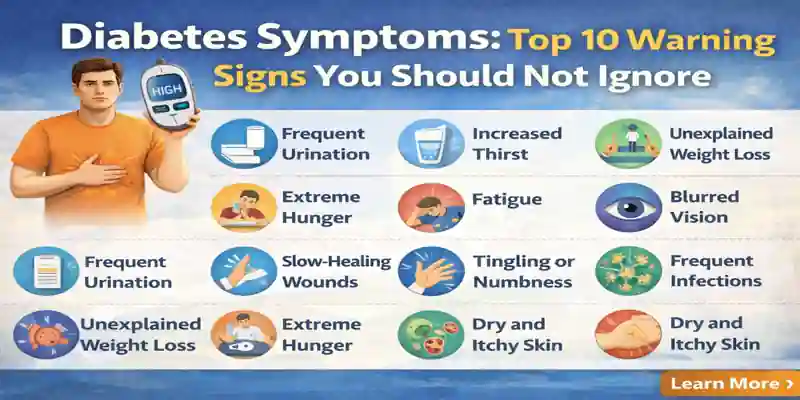
Diabetes is a common health condition that affects millions of people worldwide. Diabetes symptoms often develop slowly and may go unnoticed in the early stages. Recognizing these symptoms early can help prevent serious health complications and allow timely treatment.
Millions of people live with diabetes without realizing it because symptoms often develop slowly. Understanding the early warning signs of diabetes can help prevent serious health problems such as heart disease, kidney damage, and nerve problems.
Below are the top 10 diabetes symptoms explained in detail.
1. Frequent Urination
When blood sugar levels are high, the kidneys try to remove extra glucose through urine. This causes a person to urinate more often than usual, especially at night.
If you notice a sudden increase in bathroom visits, it could be a warning sign of diabetes.
2. Increased Thirst
Frequent urination leads to loss of fluids from the body, which causes dehydration. As a result, a person feels unusually thirsty even after drinking water.
This symptom often appears together with frequent urination.
3. Unexplained Weight Loss
In diabetes, the body cannot properly use glucose for energy. Instead, it starts breaking down fat and muscle for energy, leading to unexpected weight loss.
This symptom is more common in Type 1 diabetes, but it can also occur in Type 2 diabetes.
4. Extreme Hunger
Even after eating, the body’s cells may not receive enough glucose for energy. This can cause constant hunger or increased appetite.
This happens because insulin is not working properly in the body.
5. Fatigue
When the body cannot use glucose efficiently, energy levels drop. This leads to constant tiredness, weakness, and lack of focus.
Fatigue is one of the most common symptoms of diabetes.
6. Blurred Vision
High blood sugar levels can affect the tiny blood vessels in the eyes. This may cause temporary blurred vision.
If blood sugar remains uncontrolled for a long time, it can lead to serious eye problems.
7. Slow-Healing Wounds
High blood sugar affects blood circulation and weakens the immune system. Because of this, cuts, bruises, or infections take longer to heal.
Slow healing is a common sign of uncontrolled diabetes.
8. Tingling or Numbness in Hands and Feet
Long-term high blood sugar can damage nerves. This condition is called diabetic neuropathy.
It may cause:
-
Tingling sensation
-
Numbness
-
Burning pain in hands or feet
9. Frequent Infections
People with diabetes are more likely to develop infections such as:
-
Skin infections
-
Gum infections
-
Urinary tract infections
High blood sugar creates an environment where bacteria grow easily.
10. Dry and Itchy Skin
Poor blood circulation and dehydration caused by diabetes can lead to dry, itchy skin.
This symptom is often ignored but can be an early sign of high blood sugar.
When Should You See a Doctor?
If you notice two or more symptoms listed above, you should check your blood sugar level. A simple blood test can help detect diabetes early.
Early diagnosis makes diabetes easier to manage and prevents complications.
How to Reduce the Risk of Diabetes
Some simple lifestyle habits can lower the risk of diabetes:
-
Eat a balanced and healthy diet
-
Exercise regularly
-
Maintain a healthy weight
-
Avoid excessive sugar intake
-
Get regular health checkups
Conclusion
Diabetes symptoms may appear slowly, but they should never be ignored. Recognizing these early signs can help you take control of your health before complications develop.
A healthy lifestyle and regular monitoring of blood sugar levels are the best ways to prevent and manage diabetes.
FAQ Section
1. What are the first signs of diabetes?
Early signs of diabetes include frequent urination, increased thirst, fatigue, blurred vision, and slow-healing wounds.
2. Can diabetes symptoms appear suddenly?
Type 1 diabetes symptoms can appear quickly, while Type 2 diabetes symptoms usually develop slowly over time.
3. Who is at risk of diabetes?
People who are overweight, physically inactive, have a family history of diabetes, or unhealthy eating habits are at higher risk.
4. Can diabetes be prevented?
Type 2 diabetes can often be prevented by healthy eating, regular exercise, weight control, and routine health checkups.
5. When should I check my blood sugar?
You should check your blood sugar if you notice multiple diabetes symptoms or have risk factors like obesity or family history.